
Body chemistry
Silica, alumina, fluxes, iron and loss on ignition are interpreted as a body system rather than separate supplier values.
Silica application consulting
Ceramic bodies depend on the interaction of several minerals. Chemistry, whiteness, particle size, plasticity and firing behaviour must be considered together when qualifying a source or changing a blend.
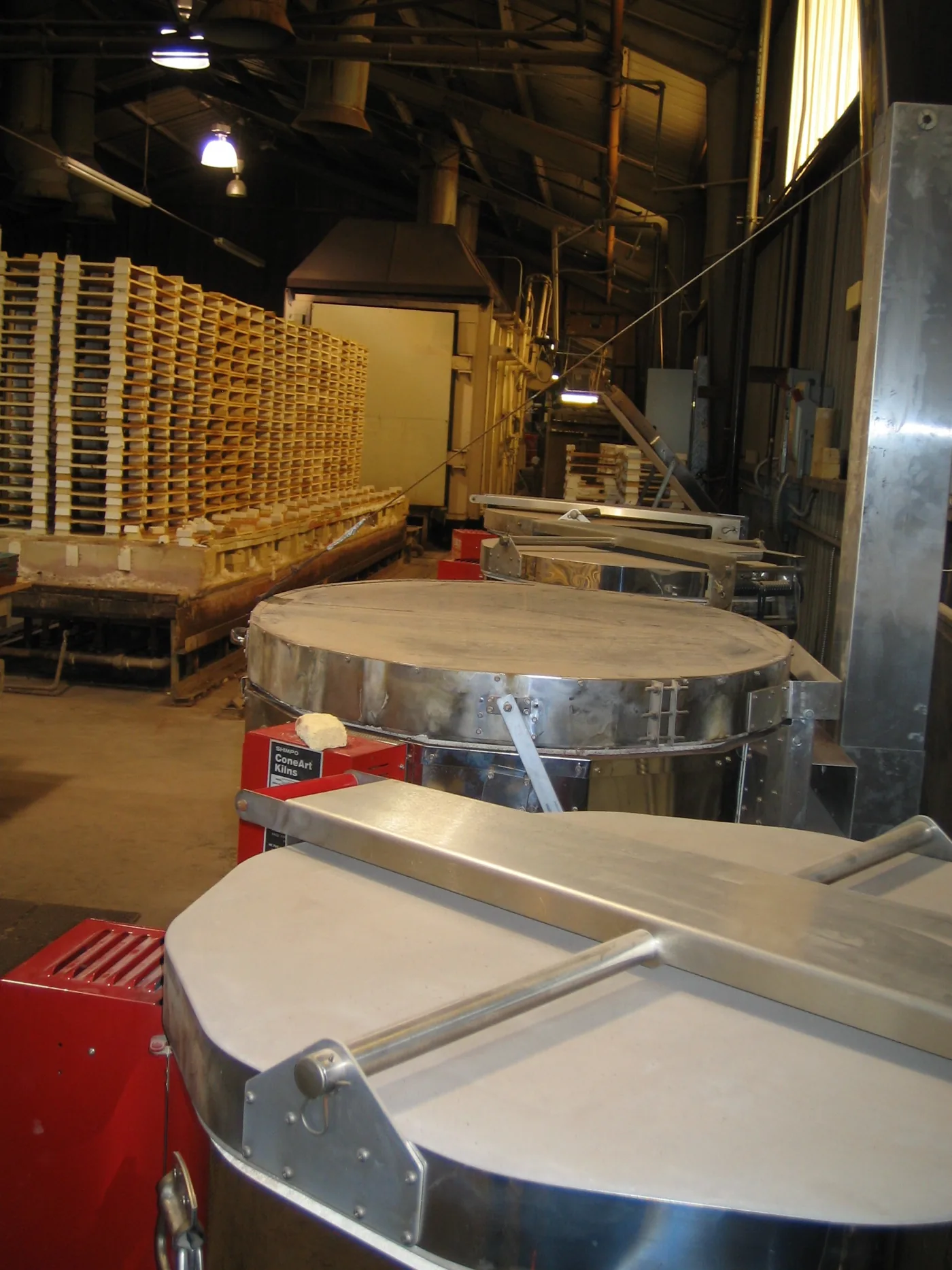
Discuss this applicationReference image: Malibu Ceramic Works, public domain. Cropped and converted to WebP.
Specification lens
The target is not simply “high silica.” The useful specification is the combination of mineral, process and end-use behaviour that the customer actually needs.
Silica, alumina, fluxes, iron and loss on ignition are interpreted as a body system rather than separate supplier values.
Fired colour, shrinkage, absorption and defect behaviour determine practical suitability.
Residue, grindability and distribution influence milling energy, slip behaviour and body packing.
Silica, feldspar and clay variability is managed through source control and blending rules.
Process architecture
Mineral approval should follow body and firing trials. Chemistry alone cannot predict ceramic performance.
Crushing, screening, blunging or washing selected for the mineral and process route
Magnetic separation and controlled handling for iron and foreign-material reduction
Ball mill or dry grinding circuit with residue and energy targets
Hydrocyclones, filter press or spray drying where the ceramic process requires them
Homogenizing bins, controlled dosing and lot-based quality release
Consulting approach
Technical guidance for silica, feldspar, ball clay and related mineral inputs used in ceramic and tile manufacturing.
Assess how the proposed mineral changes interact with clay, feldspar, silica and additives.
Laboratory trials connect raw-material values to shrinkage, absorption, colour and defects.
Set crushing, grinding, separation and blending duties around plant constraints.
Create incoming checks, blend limits and escalation rules for stable production.
Intended outcome
Mineral inputs selected and controlled for stable ceramic processing and finished-product quality.
Technical enquiry
Share the source location, available test results, present process and required application. The first discussion will identify the questions that need evidence.