
AFS/GFN
Average fineness is controlled together with the full sieve distribution, not treated as a single isolated number.
Silica application consulting
Foundry performance depends on more than chemistry. Grain distribution, fines, clay, moisture and repeatability influence mould behaviour, finish and operating stability.
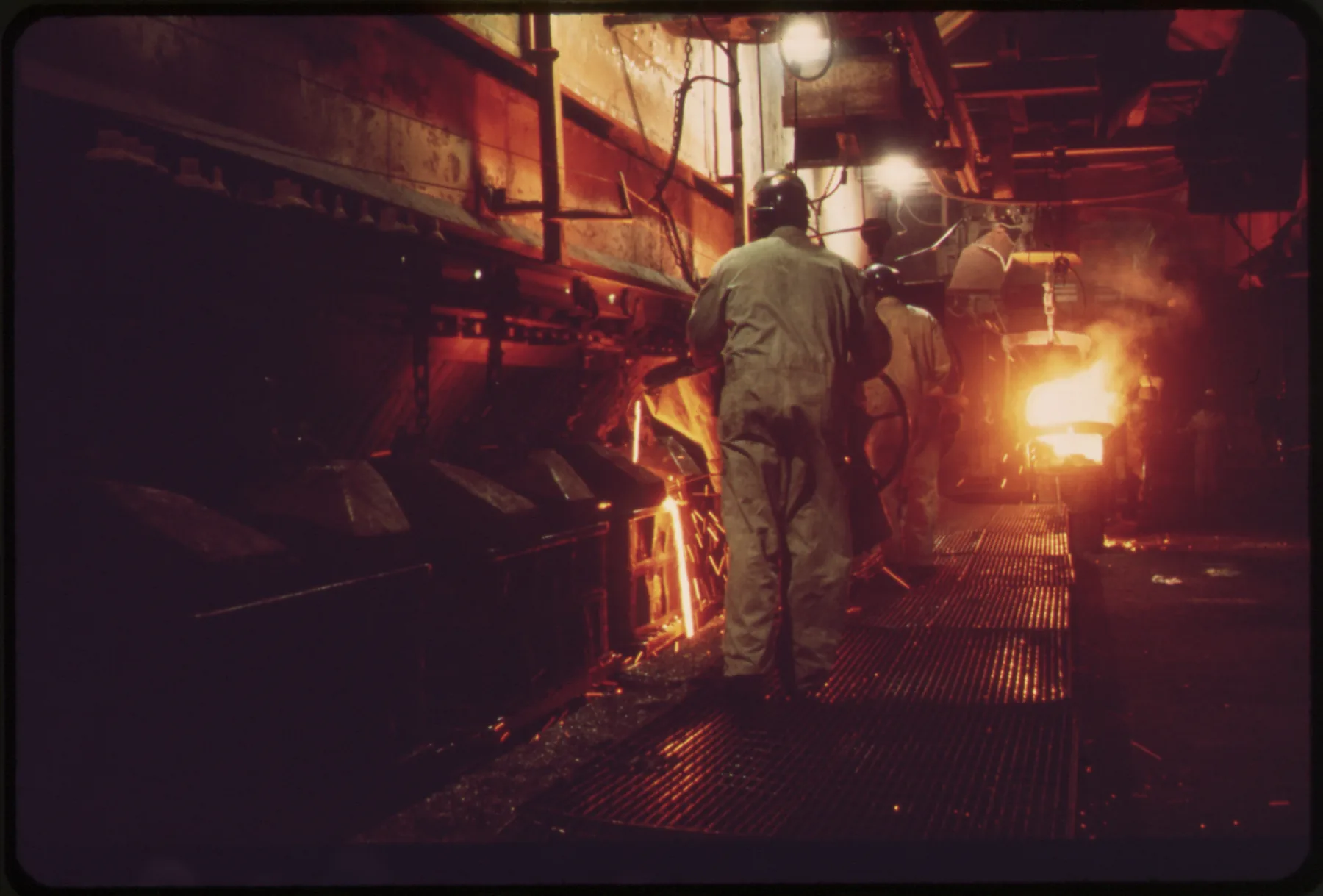
Discuss this applicationReference image: Joe Clark / U.S. National Archives, public domain. Cropped and converted to WebP.
Specification lens
The target is not simply “high silica.” The useful specification is the combination of mineral, process and end-use behaviour that the customer actually needs.
Average fineness is controlled together with the full sieve distribution, not treated as a single isolated number.
Shape, angularity and surface condition influence binder demand, permeability and mould strength.
Clay, silt, LOI and unwanted fines are managed to protect gas evolution and mould performance.
Dryer discharge, cooling, storage and packing controls preserve consistency at the foundry.
Process architecture
The correct foundry grade is application-specific. AFS/GFN without sieve distribution, grain shape and clay data is not sufficient.
Scalping, washing and feed blending to stabilize incoming variability
Attrition or washing duty selected to remove adherent clay without unnecessary grain damage
Hydraulic classification, cyclones and multi-deck screens for the required sieve envelope
Dryer and cooler with moisture and temperature monitoring
Screening, blending bins, dust collection, sampling and protected packing
Consulting approach
Silica sand processing and quality guidance for foundry moulding applications, including grading, AFS control, clay, moisture and consistency.
Understand casting size, process, binder system, defects and the foundry's accepted sand window.
Use retained percentages and grain shape alongside AFS/GFN to define the target product.
Remove harmful fines while preserving useful fractions and commercial recovery.
Link dispatch certificates and retained samples with foundry performance and complaint analysis.
Intended outcome
A controlled foundry-sand product built around the customer's moulding system and operating window.
Technical enquiry
Share the source location, available test results, present process and required application. The first discussion will identify the questions that need evidence.