
Iron mineralogy
Total iron matters, but liberation and whether iron is surface-bound, magnetic or lattice-hosted decides treatability.
Silica application consulting
Solar glass places unusually tight demands on iron, colour-forming impurities and batch consistency. The first question is whether the deposit and liberation behaviour can support the target before expensive processing decisions are made.
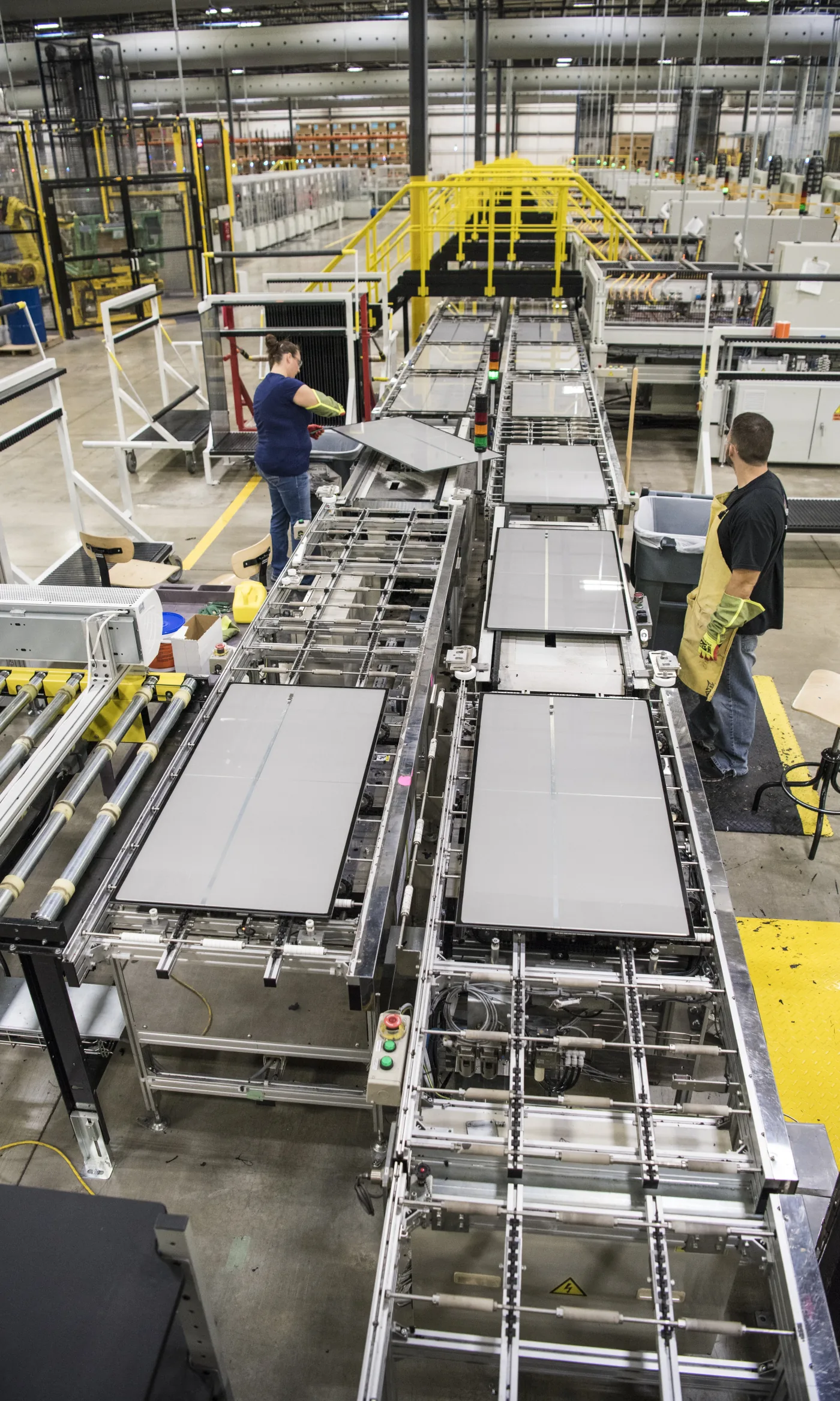
Discuss this applicationReference image: Dennis Schroeder / U.S. Department of Energy, public domain. Cropped and converted to WebP.
Specification lens
The target is not simply “high silica.” The useful specification is the combination of mineral, process and end-use behaviour that the customer actually needs.
Total iron matters, but liberation and whether iron is surface-bound, magnetic or lattice-hosted decides treatability.
Ti, Cr and other colour-forming minerals are assessed with the intended high-transmission glass target.
Sampling, contact materials, process water and storage must avoid recontaminating an upgraded product.
Incremental purity is weighed against recovery loss, reagent use, water treatment and capital intensity.
Process architecture
Low total iron alone does not prove solar-glass suitability. Mineral association, optical requirements and customer trials remain decisive.
Mineralogy, size-by-size chemistry and liberation studies before equipment selection
Controlled scrubbing, attrition and desliming to remove coatings and clay-bound impurities
High-intensity magnetic separation and classification configured from test results
Flotation or chemical treatment considered only after laboratory proof and residue planning
Low-contamination dewatering, drying, storage, sampling and protected dispatch
Consulting approach
Technical assessment and beneficiation strategy for low-iron silica resources intended for solar and high-clarity glass applications.
Separate the customer's required specification from an uneconomic pursuit of maximum purity.
Use mineralogy and size fractions to determine whether impurities can actually be liberated.
Test incremental quality gain and recovery before adding another unit operation.
Carry purity through plant materials, water circuits, drying, storage and logistics.
Intended outcome
A technically grounded go/no-go and development pathway for high-purity silica opportunities.
Technical enquiry
Share the source location, available test results, present process and required application. The first discussion will identify the questions that need evidence.